I am using Adobe Illustrator to create rose patterns that are very precise and easy to scale. This is going to be a rose for the 13 course baroque lute after Magno Dieffopruchar I am currently working on. I took a classic rose pattern and slightly altered it. I used the functions within the program to make the pattern symmetrical.
Month: December 2014
Varnishing the Bowl
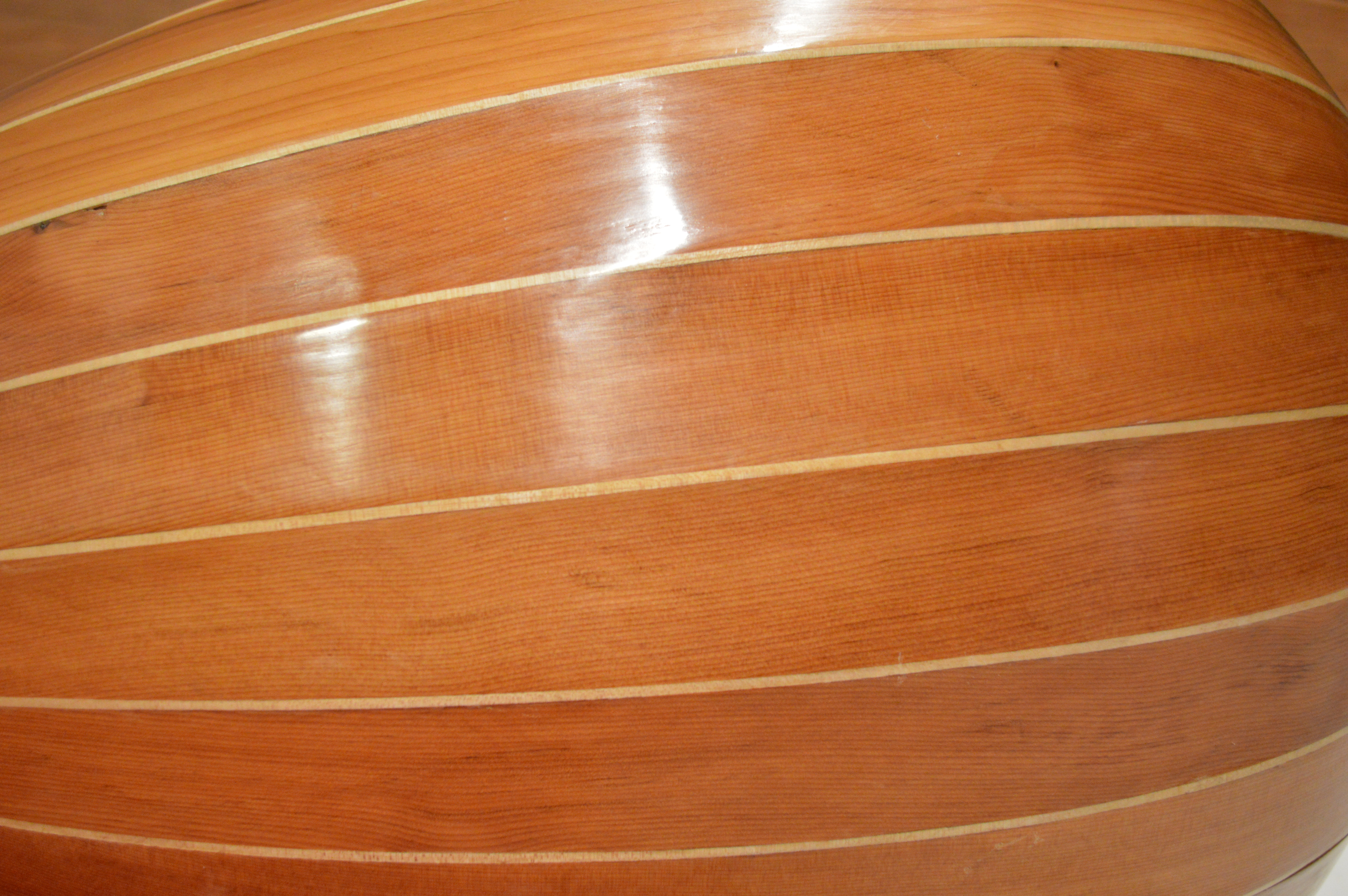
UncategorizedHere is the bowl after a few coats of varnish. Yew is a very dense wood and doesn’t have the pores that hardwoods have; so finishing requires less coats. This is a homemade varnish that is all natural, which means NO chemicals. It is spirit based and applied with a french polish technique. After there are enough coats of varnish, the surface is polished to a luster with pumice.
Gluing On Wooden Frets
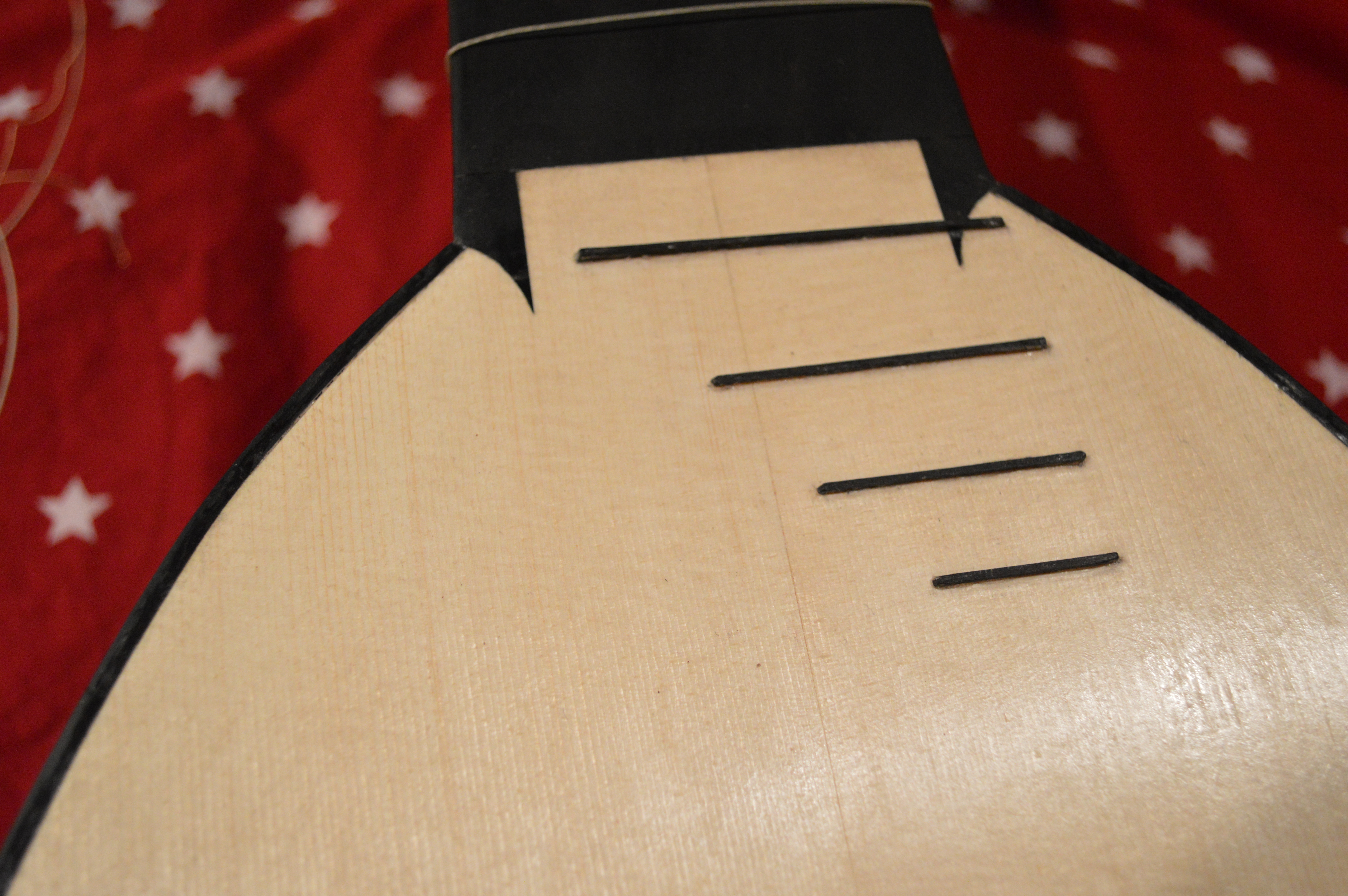
UncategorizedI measured out the placement for the 9th through 12th frets on the belly of the lute. These are made from ebony and planed down to about 1 mm thickness. First they are glued on and then I applied a few coats of wax for protection on the spruce belly. It is tricky to keep the spruce clean from any ebony dust contamination. A sharp scraper helps to keep dust to a minimum.
Fitting Pegs to Pegbox
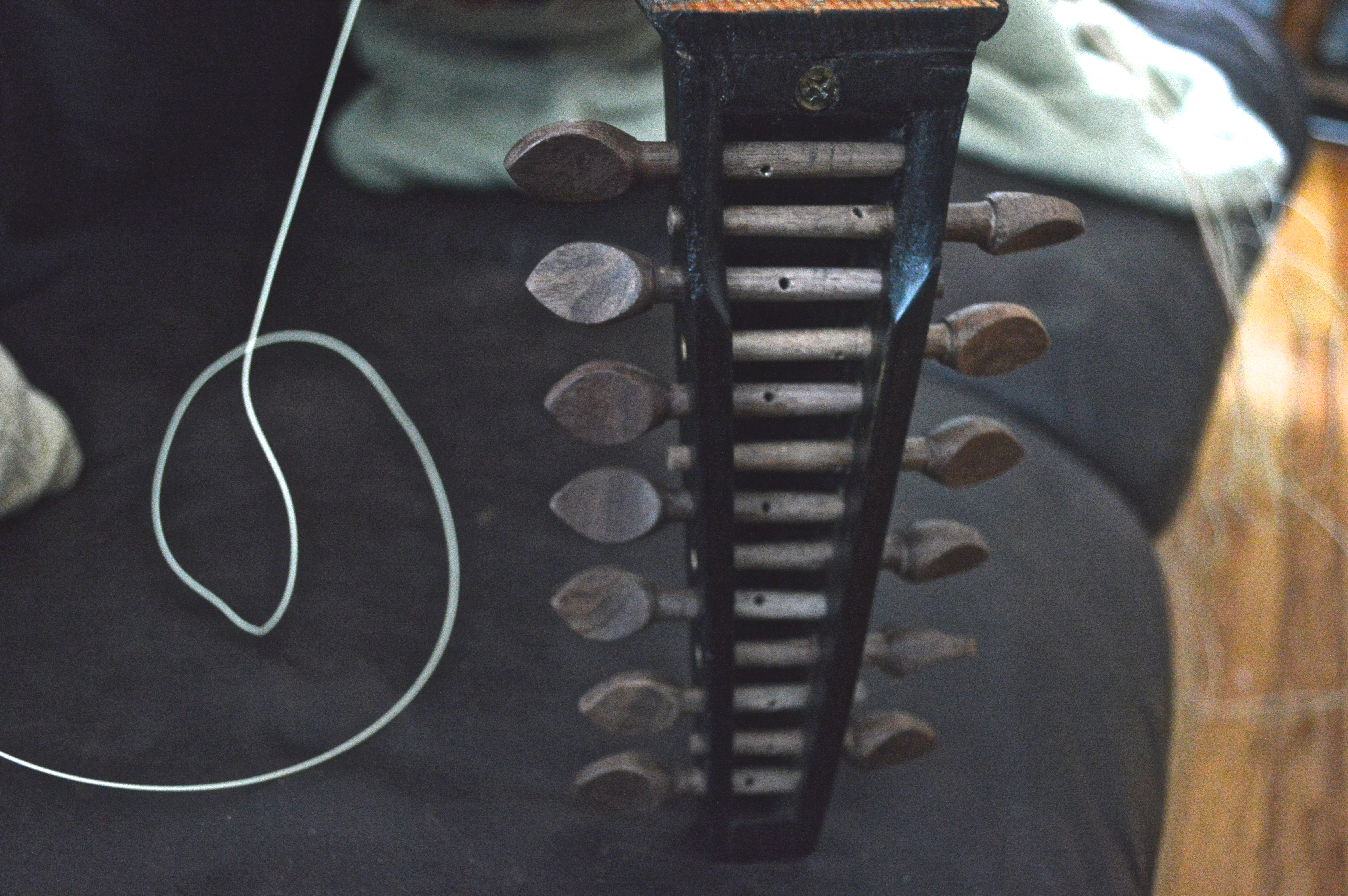
lute pegsAfter the pegs are shaped on the lathe, the round head must be shaped into a flat head so it can be easily turned. I use a reamer with a 1:30 taper for the peg holes. The taper makes the pegs stick enough into the pegbox so that the string won’t slip at full tension. It takes awhile to fit the pegs into the pegbox so that they turn freely without binding and stick out in an aesthetically pleasing way. After the pegs are finished completely, I polish the heads with a coating of beeswax.